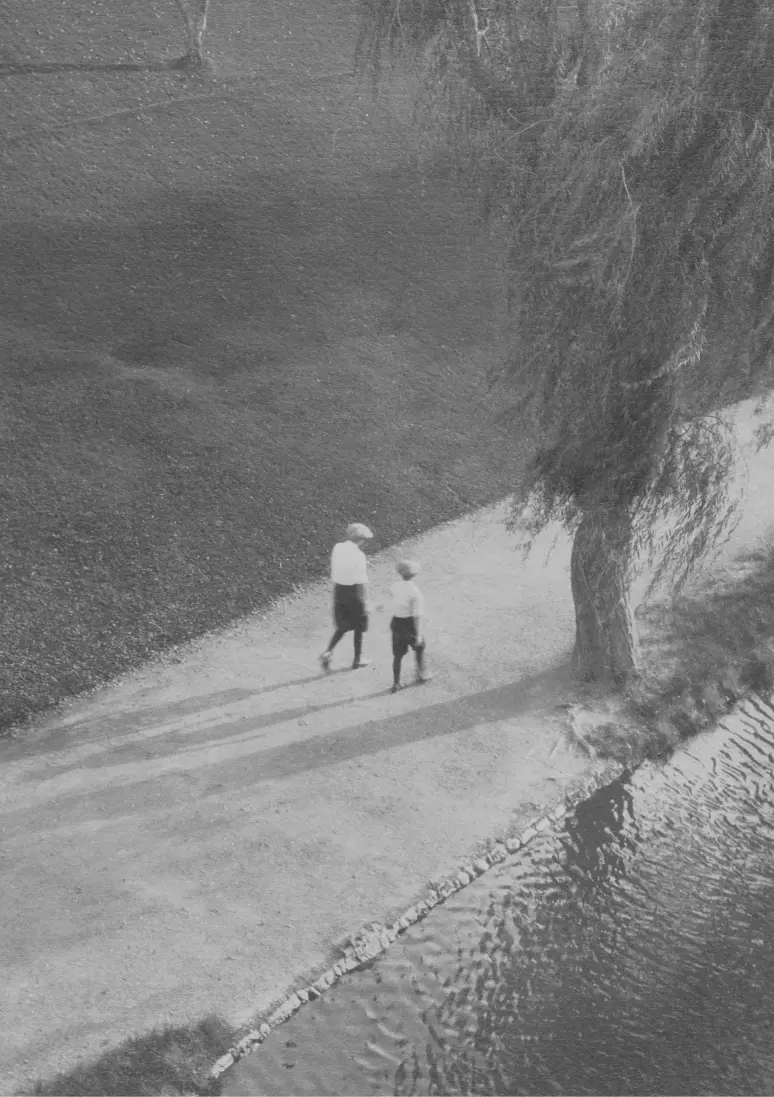
The island is a geographical correction to the modern habit of mistaking bigness for importance. We live among measurements so vast they have become emotionally unusable: economies measured in trillions, flights tracked across continents, cloud storage calculated in units that sound like minor planets. We can watch a storm form over an ocean from a phone while failing to recall the name of the street behind our hotel.
An island, by contrast, puts the world where you can see it.
This is not because islands are simple. They are not. They are often places of elaborate history, imperial neglect, ecological precarity, logistical comedy, family politics, seasonal labour, property disputes, mysterious municipal decisions, and very firm opinions about ferries. But they are bounded. They have an edge. You can stand on a ridge, look in one direction, then another, and understand—at least provisionally—the shape of the place.
This is the first lesson of scale: a world does not have to be enormous to be complete.
On an island, distance becomes intimate. A path is not merely a route but a relationship between a house, a chapel, a spring, a field, and the person who has been walking it every morning for forty years. A harbour is not an abstract piece of infrastructure but a daily theatre: ferries arriving with luggage and impatience, fishing boats returning with weathered faces, crates of peaches, boxes of medicine, cartons of beer, teenage cousins, and at least one man who appears to have been waiting for a boat since 1973.
A field is not “rural land.” It is the patch behind the café where tomatoes ripen, where goats are briefly unwelcome, where an uncle once fell from a mule, where the family’s olives are harvested in November. A table is not a dining surface. It is where the island’s actual news is distributed: who is arriving, who is leaving, whether the wind will turn, whether the water tank is low, whether the doctor is on the island, whether the hotel has overbooked again.
The world, on an island, is not reduced. It is made accessible.
The Pleasure of the Known Edge
The mainland has the psychological advantage of seeming limitless. You can always drive farther. There is always another road, another town, another supermarket large enough to make you reconsider civilization. An island, with its visible perimeter, offers something rarer: the comfort of a limit.
For people trained by the internet to experience every question as a portal to five hundred more questions, this can be unexpectedly calming. On an island, one may eventually reach the end of the road. The road simply stops. Beyond it: sea, scrub, rock, perhaps a goat of unusual confidence.
This is not a failure of transport planning. It is an invitation to attention.
The philosopher Gaston Bachelard, whose The Poetics of Space can make a drawer feel like a metaphysical event, was interested in the ways intimate spaces shape imagination. A house, for Bachelard, was not merely shelter; it was a storehouse of memory, reverie, corners, thresholds, and private weather. An island can perform a similar function on a larger scale. It is a habitable enclosure. It contains routes, habits, histories, and boundaries that slowly become legible.
The visitor who arrives with a map may believe that the map is the island. The resident knows that the island is the place where the map becomes insufficient. The map can tell you that a path is 2.4 kilometres. It cannot tell you that the path is steep after the old cistern, that the shade disappears at noon, that the stone wall is lined with wild capers in May, or that the person at the top of the hill will ask where you are staying and somehow already know the answer.
Scale is not simply size. It is the density of meaning within a given distance.
A city may contain a thousand things within five minutes’ walk, but many of them are interchangeable: pharmacy, coffee shop, branch bank, boutique selling objects made to look as though they were found in a coastal shed. An island route may contain only four things—a gate, a small church, a fig tree, and a view of a bay—but each is likely to have a specific place in someone’s memory. The island’s economy of objects makes attention more expensive and therefore more rewarding.
The Short Journey
On an island, a journey that would be negligible elsewhere can acquire the status of an expedition.
“We went to the other side of the island” may mean fifteen minutes by scooter, forty minutes by bus, or three hours by boat because the road is a suggestion rather than a promise. But the phrase carries weight. The other side is not merely another district. It is a change of weather, dialect, exposure to the wind, beach texture, farming pattern, family network, and available pastries.
Cities flatten distance through repetition. The underground train, the motorway, the rideshare app—these systems make a mile feel like nothing, and then, eventually, make everything feel like nothing. You travel through a place but not necessarily within it. The journey becomes a blank interval between destinations.
On an island, the journey remains visible. You climb, descend, turn a corner, stop for goats, wait for a delivery van, and arrive mildly altered. This is the old human scale of travel: the body understands where it has been because it has participated in getting there.
Robert Macfarlane, writing about paths and landscapes, has repeatedly suggested that walking is not simply movement through territory but a way of reading it. A path holds use, memory, erosion, and return. On an island, paths are often particularly eloquent because they have fewer competitors. There may be no bypass to erase them, no suburban expansion to absorb them, no alternative route that allows you to avoid the interesting part.
A footpath can reveal the whole island’s logic. It may begin at the port, rise past old warehouses, cross terraces once cultivated with wheat, pass a dry-stone wall, and end at a chapel above the sea. In that modest climb are commerce, faith, agriculture, labour, weather, and the longstanding human suspicion that a view is improved by making people earn it.
The scale is small. The meaning is not.
The Harbour as Parliament
Every island has at least one place where public life gathers itself. Often this is the harbour. The harbour is the island’s front door, loading dock, stage, argument, and occasionally its waiting room for disappointment.
In a large city, infrastructure is mostly anonymous. A train arrives because trains arrive. A delivery van unloads because delivery vans unload. Nobody turns to watch the municipal bins being collected unless something has gone very wrong.
On an island, the ferry has personality. It has a timetable that may be technically published but is more properly understood as a topic of collective interpretation. Its arrival changes the atmosphere. The quay becomes active. People stand. People call. Luggage appears. Cars reverse in ways that would not be tolerated by any insurance company headquartered on the mainland.
The ferry also makes visible a truth of island life that tourism sometimes prefers to soften: no island is self-sufficient in the romantic sense. It depends on networks. Food, fuel, medicine, construction materials, school supplies, visitors, workers, mail, gossip, and the occasional emergency part for a water pump all arrive by sea or air. The island is bounded, but it is not isolated.
This is another lesson in scale. A small world is not a closed world. Its borders do not eliminate connection; they clarify it.
The island harbour shows the relationship between local life and the larger world with almost theatrical precision. A ferry docks carrying passengers from Athens, Marseille, Naples, Honolulu, or wherever the nearest complicated mainland happens to be. They arrive with wheeled suitcases, expectations, online reservations, and a belief that the island is about to begin for them.
But the island began much earlier. It began with the dawn fishing boat, the bakery’s first trays, the water tanker, the school run, the old woman opening her shutters, the man setting chairs outside the café. The ferry simply brings the next scene.
A visitor who wants to understand an island should spend time near the harbour without needing to go anywhere. Sit down. Order something. Watch what arrives and what leaves. You will learn more about the island’s actual scale from one hour of harbour life than from three drone videos scored with acoustic guitar.
The Field Behind the Hotel
The island visitor sees landscape; the island resident sees use.
This distinction can be embarrassing, because visitors tend to speak of “unspoiled views” while standing in front of a field whose survival depends on someone else waking at six, maintaining terraces, fixing fences, negotiating drought, and wondering whether their children will continue the work. The view is beautiful partly because it has been made and remade by labour.
The island is often presented as an escape from economics. In reality, it is economics in close-up. You can see the consequences of a season. A closed restaurant is not merely a business closure; it may be a family problem. A new hotel is not merely a new hotel; it is a question about water, staff housing, traffic, land prices, and whether the bakery will now sell croissants at a price that requires a brief personal reflection.
On a small piece of land, every development appears larger because there is less elsewhere for it to hide among. This is why island communities can seem resistant to change, and why that resistance is frequently misread. It is not always nostalgia. Sometimes it is simply accurate accounting.
The field behind the hotel may be a field, a future villa site, a childhood memory, a food source, an inheritance, a firebreak, a disputed boundary, and a buffer against the idea that every beautiful place should become a product. All at once.
The visitor need not solve these questions. Indeed, the visitor should resist the urge to become an amateur island planner after two lunches. But one can see them, and seeing them changes the quality of travel. It replaces the vague wish for “authenticity” with something more useful: respect for the fact that a place is inhabited before it is experienced.
The Table as a Measure
The island table may be the smallest and most perfect instrument of scale.
A meal on an island can look deceptively simple: bread, tomatoes, cheese, fish, beans, wine, a plate of something fried that everyone agrees is better than it has any right to be. But this is not minimalism in the lifestyle-magazine sense. It is proximity.
The tomatoes came from nearby, or did not. The fish arrived that morning, or did not. The cheese is from animals that grazed on the slopes you can see from the chair, or it is a different cheese with an unfortunate marketing story. The wine has a local geography. The bread has a local schedule. The waiter knows the kitchen’s limits and may, if you are fortunate, steer you away from an overambitious order.
At an island table, the distance between source and meal can be short enough to understand. This does not make the food morally pure. It makes it specific.
The Italian writer Carlo Petrini, founder of the Slow Food movement, has argued for food that is good, clean, and fair—a phrase that sounds almost too tidy until one encounters the alternative. On an island, the idea becomes tangible. Good food has to make sense with the season, the terrain, the boats, the farms, and the labour available. Clean food has to reckon with the sea and soil. Fair food has to acknowledge that the person serving it is not merely part of the scenery.
The best island meals make the local world feel neither quaint nor grandiose. They make it feel coherent. A plate of beans can be a lesson in climate, history, and good judgment. A grilled fish can suggest, without saying so, that the sea is not an aesthetic backdrop but a working system. A table becomes a map with cutlery.
The Island and the Imagination
There is, of course, a reason islands have so thoroughly occupied literature. They are useful to writers because they are useful to thought.
Shakespeare put tempests and transformations on islands. Defoe sent Robinson Crusoe to one in order to investigate solitude, labour, possession, and the alarming human capacity to reorganize a beach into an empire. Virginia Woolf used lighthouses and islands to explore time, perception, family, and the strange instability of what looks permanent from a distance.
Islands allow a writer to draw a line around a world and then ask what happens inside it.
But the best islands resist becoming metaphors. They are too full of practicalities. Someone must repair the generator. Someone must bring milk. Someone’s roof leaks. The ferry is cancelled. A wedding is scheduled on the only Saturday when the square was going to be quiet. The island’s metaphysical power is constantly interrupted by its plumbing.
This is part of the charm. The magic of an island is not a spiritual mist hovering above the water. It is the coexistence of enchantment and administration. You can stand before a sea so blue that it appears designed by an overconfident painter, then hear someone shouting about a parking space.
The sublime is never very far from the ordinary. On an island, that is not a contradiction. It is the whole point.
A Manageable World
The great gift of island scale is not escape. It is proportion.
On an island, you begin to notice how much life is organized around a few reliable coordinates: the harbour, the road, the ridge, the market, the beach, the family table, the weather. These are not limitations so much as points of orientation. They allow a person to know where they are.
Modern life offers endless access and very little orientation. We can read anything, buy anything, contact anyone, travel almost anywhere, and still feel vaguely stranded. The island says: begin here. Walk to the square. Take the path above the cove. Eat when the kitchen is ready. Watch the wind. Learn the name of one tree.
This is not a programme for abandoning cities, careers, ambition, or indoor plumbing. It is a reminder that accessibility is not the same as availability. The world becomes available to us in an endless stream; it becomes accessible only when we have time and attention enough to make a relationship with it.
An island gives those conditions a physical form. It asks us to stop mistaking infinite choice for richness. It offers instead a finite field of attention: a path, a harbour, a field, a table.
And perhaps that is why Cavafy’s Ithaca still works on us. Ithaca is not valuable because it is extraordinary in itself. It is valuable because it gives the journey shape, direction, and a reason to notice what happens along the way.
The island may be small. But that is not the same as being minor. A small world, properly attended to, can contain nearly everything: weather, work, appetite, memory, history, desire, inconvenience, beauty, and the ancient human pleasure of knowing which way home lies.